
Custom Flags
Custom Flags
A clear visual can turn movement into recognition.
Custom flags can help people locate an entrance, recognize a team, or find an event area in a busy setting. Begin with the place and the direction people approach, then keep the message focused enough to understand while the fabric is moving.
Use the current product configuration as the authority for formats, construction, finishing, and compatible support. The guidance below will help you prepare without assuming an option is available.

Give the display one clear role
Storefront cue
Help visitors spot an arrival point.
Event arrival
Create a moving visual landmark.
Team or community moment
Carry a simple identity in an active setting.
Directional presence
Support fast recognition in a busy place.
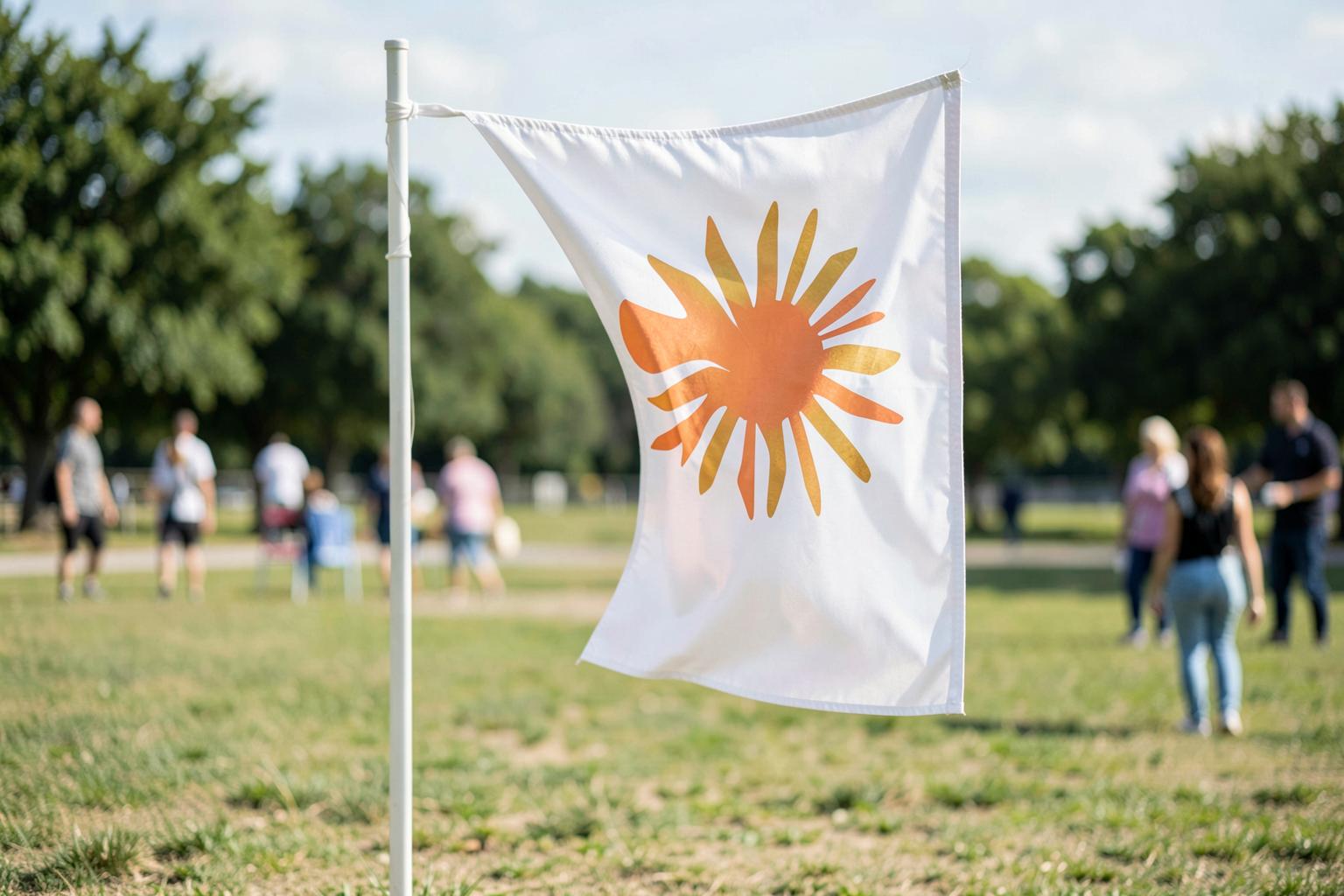
Format and place
Start with the setting and support.
The display environment should shape the choice before the artwork does. A conventional rectangular flag can suit a familiar pole, wall, or fence relationship. A feather-shaped display may offer a tall profile for a short vertical idea. A teardrop-style silhouette can keep attention on one compact mark. Treat these as planning categories only and verify the formats shown in the current configuration.
Plan for the approach
Note whether people arrive head-on, pass from one side, or move around the display. Confirm how the selected construction handles the reverse before relying on it for independent reading.
Match shape to message
A broad field can hold a wider composition. A tapered or curved format asks for less copy, more open space, and careful placement around the narrowing edge.
Confirm support and clearance
Select a base, pole, bracket, sleeve, or attachment method only when it is compatible with the chosen format and actual surface. Leave room for fabric movement, people, vehicles, trees, nearby structures, and an unobstructed path to lower the display.
Artwork, setup, and care
Design for movement, then care for the display.
A flag is rarely viewed perfectly flat. Wind, a curved pole, a sleeve, and the angle of approach can all interrupt the composition. Design the most important information to survive those changes, and plan how the display will be checked, lowered, dried, and stored after use.
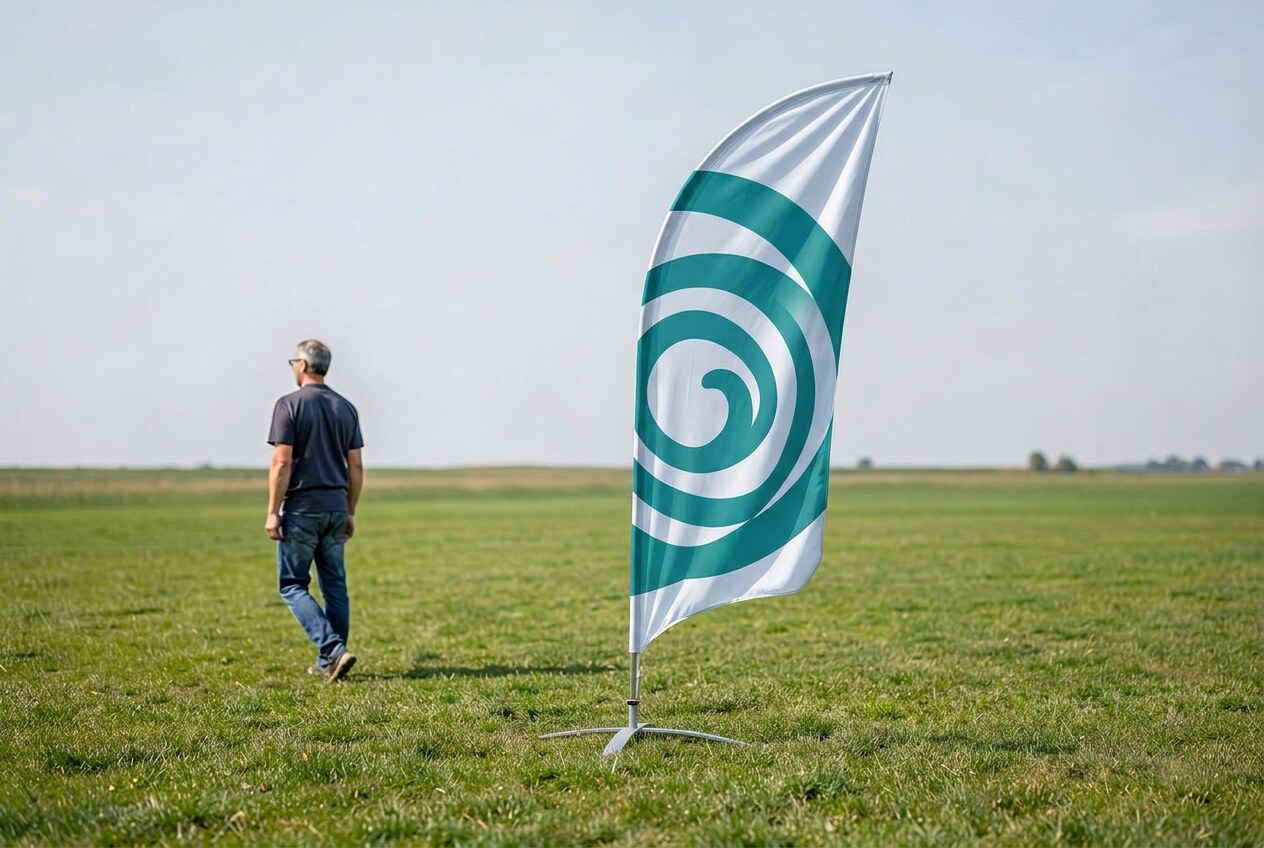
Keep the message clear while it moves
Use strong contrast, simple forms, and one dominant idea. Keep faces, phone numbers, thin lines, and essential marks away from sleeves, seams, grommets, attachment zones, and cut edges. Extend backgrounds through the required edge area, and test the design at the distance and angle where it will actually be seen.
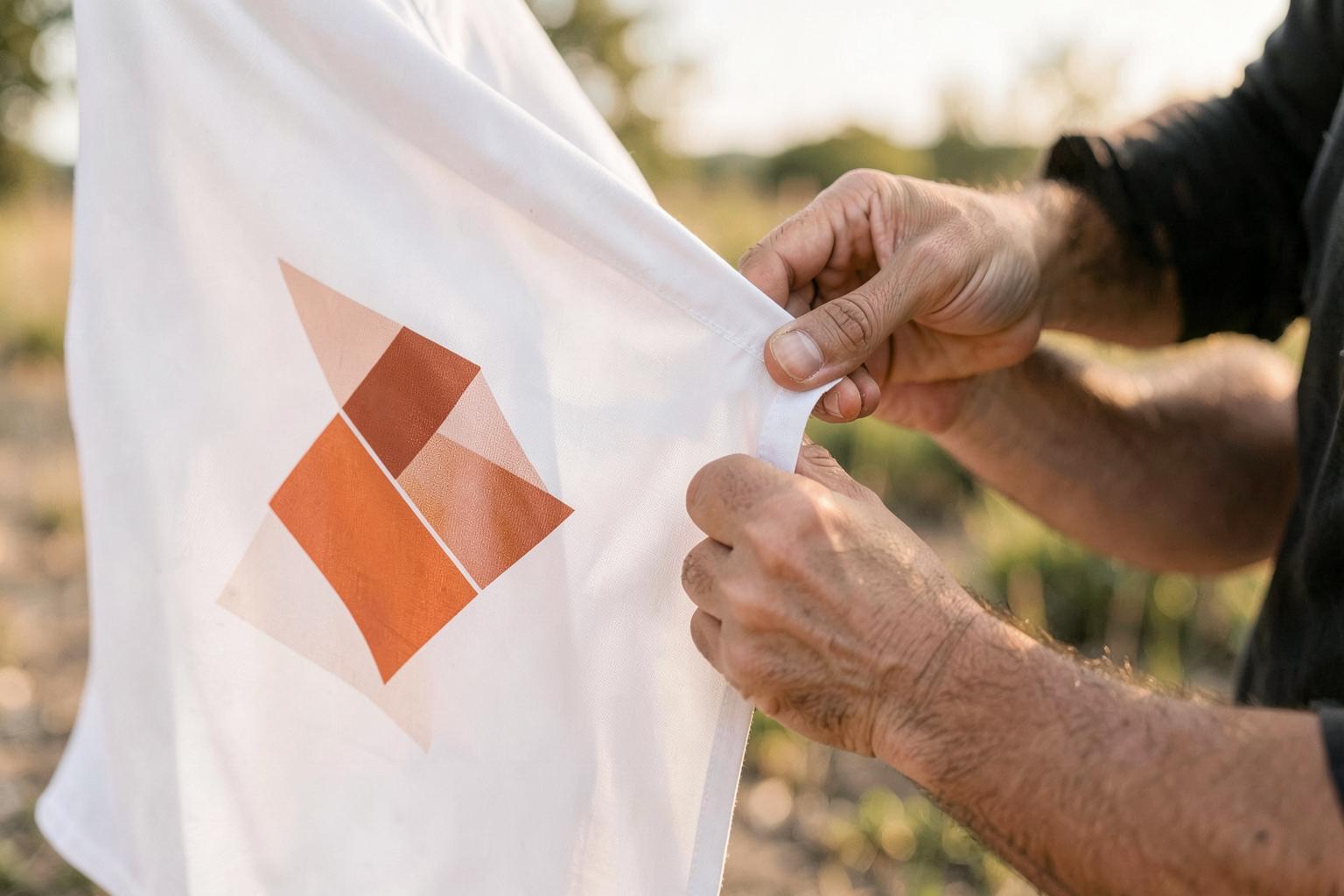
Inspect before display and before storage
Check the fabric edge, seams, attachment areas, pole connections, and base before every setup. Use judgment as conditions change; do not leave the fabric striking rough surfaces or continue displaying it when the site is no longer appropriate. Follow the selected product’s care instructions, allow it to dry completely, and store it clean and protected from moisture and sharp objects.
Conditional decision guide
Decide from the environment inward
Work through these questions before committing artwork to a silhouette. Every format and support reference remains conditional: verify the current product configuration and a compatible support before ordering.
- 01
Display environment
Start indoors or outdoors, then note clearance, foot traffic, nearby walls, and changing conditions. Confirm that the current configuration and support are appropriate for the setting.
- 02
Viewing direction
Decide whether people approach primarily from one side or from both. This affects artwork orientation and whether any offered face construction fits the way the message needs to read.
- 03
Ground or mounting surface
Soft ground, pavement, indoor flooring, a wall, and a conventional pole call for different compatible support. Verify the support and attachment method before ordering.
- 04
Message length
A familiar rectangle can allow a broader composition. A tall shaped display favors a short vertical idea, while a more stable silhouette can focus attention on one mark. Confirm which formats are actually offered.
Compare the role before choosing the format
These comparisons describe common planning differences, not current availability or a performance promise. Use the options displayed in the live configuration as the source of truth.
| Display choice | May fit when | Planning strength | Verify before ordering |
|---|---|---|---|
| Standard rectangular flag | A conventional pole, wall, fence, or familiar flag presentation | A broad, recognizable canvas that can work in horizontal or vertical orientations | Confirm viewing direction, sleeve or attachment details, and clear space for movement |
| Feather-shaped flag | A tall arrival cue where a short vertical idea may be useful | A narrow profile that can remain visually distinctive as people approach | Use the exact template and verify a compatible curved pole and surface-specific base |
| Teardrop-style flag | A compact shaped display centered on one logo or simple visual | A contained silhouette with less room for long copy | Keep artwork clear of tapered areas and confirm the compatible sleeve and support |
| Vinyl banner | A broader fixed message on a wall, fence, or designated event structure | More flat space for hierarchy and supporting information | Plan suitable attachment, clearance, and conditions for the intended location |
| Rigid sign panel | A stationary directional or informational role | A flat, still surface for content that should not move | Confirm mounting, placement rules, edges, and the support structure |
Before the event
Artwork and event prep
A good result depends on the relationship between the artwork, the finished shape, and the place it will be used. Keep this checklist with the project from the first layout through packing day.
Audience and viewing distance
- Identify the first direction of approach and the distance at which recognition matters.
- Decide whether the audience is walking, driving past, gathering, or standing nearby.
Selected format and support
- Choose only from the formats shown in the current configuration.
- Verify that the pole, base, bracket, clips, rope, sleeve, or other support is compatible with the selected format and surface.
- Measure overhead and side clearance from people, vehicles, trees, walls, and neighboring displays.
Template and safe area
- Use the product-specific template when one is supplied, rather than adapting a generic rectangle.
- Extend backgrounds through the indicated edge area and keep essential content away from seams, sleeves, grommets, cut edges, and tapered sections.
- Check front, reverse, and orientation expectations against the selected configuration.
Concise hierarchy
- Lead with one recognizable mark or short message and remove details that cannot be understood quickly.
- Use strong contrast, generous spacing, and type that remains clear when the fabric moves or curves.
Final artwork check
- Use vector artwork for logos and type when possible; inspect raster images at intended scale.
- Outline fonts or include the required font information, embed linked images, and check spelling, color references, proportions, and orientation.
- Keep a clean production file separate from editable working files.
Packing and installation plan
- Test-assemble the display before the event and inspect fabric edges and every attachment point.
- Pack the compatible support, a clean storage bag, and a clear way to lower the display if conditions change.
- Plan how the flag will be cleaned, fully dried, and stored between uses.
Custom Flags questions
Practical answers for planning the artwork, support, placement, event day, and care.
What information belongs on a custom flag?
Use the smallest set of information that identifies the organization, place, or direction immediately: one mark, name, short phrase, or simple cue. Add contact information only when viewers have enough time and distance to use it. Detailed explanations usually belong on a broader, stationary sign.
Should I choose a rectangular, feather, or teardrop-style flag?
A rectangle may suit a conventional pole, wall, fence, or a broader composition. A feather-shaped display can support a tall, short message, while a teardrop-style silhouette can focus on one compact mark. These are general planning distinctions, not a list of available options; verify the current configuration and compatible support before ordering.
Will artwork be readable from the reverse?
That depends on the construction shown in the current configuration. Some single-face fabric displays may show a lighter or reversed impression from the back, while another offered construction may treat each direction differently. Confirm the selected option whenever independent reading from both approaches matters.
What file format should I submit?
Vector artwork is generally useful for logos, lettering, and simple shapes. A high-resolution raster original may suit photography or texture. Follow the file guidance and exact template provided by the current workflow, and do not enlarge a small web image or screenshot and expect it to become sharp.
How much text can fit on a flag?
There is no dependable universal word count because format, scale, typeface, movement, and viewing distance all change the answer. Give the flag one primary message and test whether it can be understood in a brief glance. If small supporting copy is essential, consider pairing it with a broader stationary display.
Can a custom flag be used indoors?
It may be appropriate when the selected format and support fit the space. Check floor stability, overhead clearance, pedestrian routes, nearby fixtures, venue requirements, and any trip hazards. Confirm the actual support offered before planning the layout around it.
How should I choose a base or mounting method?
Match the support to the selected flag format and the real installation surface. Soft ground, pavement, indoor flooring, walls, and conventional poles call for different approaches. Consider clearance, pedestrian contact, changing conditions, and how the display can be lowered, then verify compatibility with the current configuration or production team.
Can I leave the flag outside all the time?
Do not assume continuous outdoor suitability. Sun, moisture, pollution, contact with nearby objects, and wind can increase wear. Follow the care limits supplied with the selected product, inspect it regularly, and lower it whenever conditions or the site make continued display inappropriate.
How do I clean and store a custom flag?
Follow the care instructions for the selected construction. As general guidance, remove loose dirt gently and avoid bleach, harsh solvents, abrasive scrubbing, and unapproved heat. Let the flag dry completely before folding or rolling it, then store it clean and away from moisture, sunlight, sharp objects, and heavy items.
What should I check before a public event?
Test-assemble the flag and compatible support, verify artwork orientation, inspect seams and attachment areas, and confirm that the support suits the venue surface. Check clearance from people, vehicles, branches, structures, and other displays. Pack every required part, a clean storage bag, and a plan for lowering the display if conditions change.